In this article
Quick answer
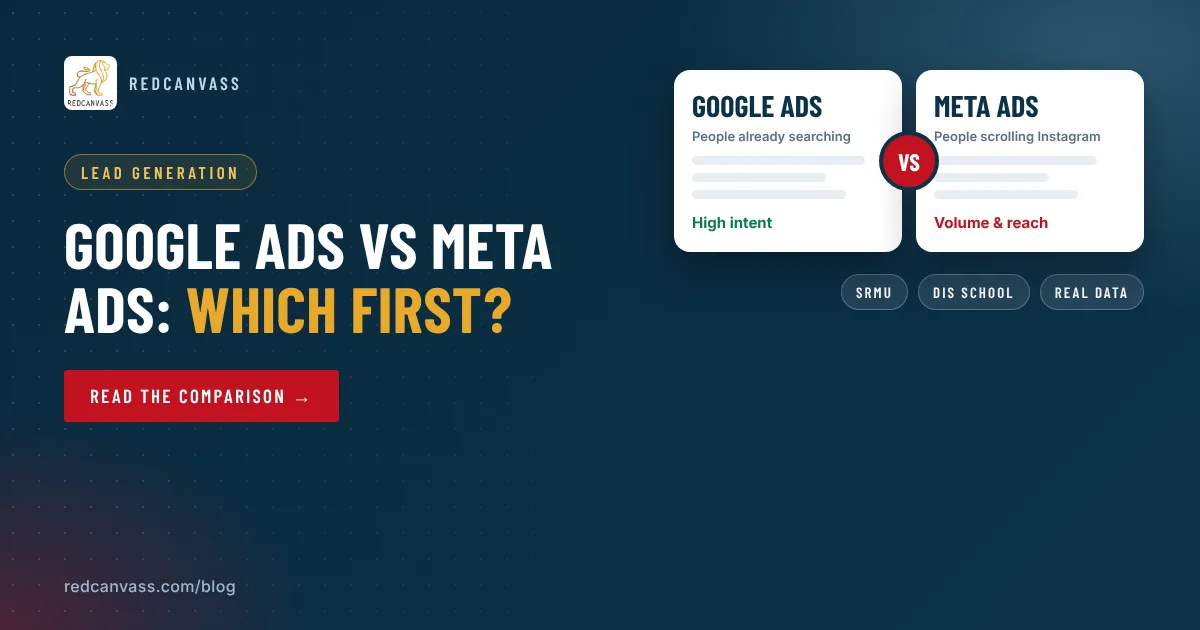
Start with Google Ads if people already search for what you sell, because you reach them at the moment of need. Start with Meta Ads if demand has to be created, your buyers are easy to describe by place, age or interest, or you need lead volume quickly. Most businesses that grow end up running both, each judged on lead quality.
"Should we do Google or Facebook?" is one of the first questions we hear from business owners in Lucknow. Both can bring good enquiries, and both can waste money. The right first channel depends less on which platform is "better" and more on how your customers decide.
The core difference: searching vs scrolling
Google Ads shows your ad when someone types a search such as "B.Tech admission Lucknow" or "home loan agent near me". The person has already decided they need something; your job is to be the best answer.
Meta Ads (Facebook and Instagram) shows your ad to people who match an audience you choose while they scroll. They were not looking for you a minute ago. Your job is to interrupt with something relevant enough to act on.
| Google Ads (Search) | Meta Ads (Facebook and Instagram) | |
|---|---|---|
| How people find you | They search for it | You reach them while they scroll |
| Intent | High: they want it now | Lower: interest has to be created |
| Lead volume | Limited by how many people search | Can scale quickly across a region |
| Cost per lead | Often higher per lead | Often lower per lead, especially with instant forms |
| Lead quality | Usually stronger intent | Mixed; needs qualifying questions and quick follow-up |
| Creative needed | Mainly text ads and a strong landing page | Images, video and fresh creative every few weeks |
| Best for | Urgent or clearly searched needs | Considered purchases, local audiences, building awareness |
General patterns from campaign work; your own numbers may differ by industry and city.
When to start with each
Start with Google Ads if…
- People already search for your service or product by name
- The need is urgent: repairs, medical, legal, admissions closing soon
- You have a landing page that answers the search clearly
- You would rather have fewer, stronger enquiries
Start with Meta Ads if…
- Few people search for what you offer, but many would want it
- Your buyers are easy to describe by location, age or interests
- You have good photos or video of your product, campus or work
- You need volume and can follow up every lead quickly
What our own campaigns show
Two of our published case studies show the channels doing different jobs.
SRMU Lucknow: both channels, different roles
For Shri Ramswaroop Memorial University, Google Ads converted students who already wanted a programme, while Meta and Instagram made sure SRMU was on the shortlist before students searched. In 2026, Google Ads produced 22.4% more application forms and 18.4% more admissions than the same period of 2025. On Meta, cost per lead fell about 75% since 2024, and about 72% of Meta enquiries that reached the application form stage went on to take admission. Read the SRMU case study.
DIS School: Meta Ads at scale
For Dharwad International School, Meta Ads lead-form campaigns grew leads from 391 in season one to 1,361 in season two while cost per lead held at ₹80 to ₹84. Call campaigns ran alongside and averaged ₹54 per call over the season, ranging from ₹36 to ₹107 by month. Read the DIS case study.
Lead quality: the part most comparisons skip
A cheaper lead is only cheaper if it turns into a customer. Meta instant forms are quick to submit, which brings volume but also more people who were only curious. Google search leads arrive with stronger intent but usually cost more each. Three habits close the gap:
- Add one qualifying question to Meta forms, such as the course, budget range or preferred visit date.
- Call back fast. The same day is the minimum; within the hour is better. Slow follow-up wastes the cheapest leads first.
- Mark lead quality every week and compare channels on cost per qualified lead, not cost per lead.
A simple way to start
- Set up tracking firstGoogle Ads conversion tracking, the Meta Pixel and a way to record lead quality. Our lead generation work always starts here.
- Start the channel that matches how buyers decideSearched and urgent: Google Ads. Considered, visual or local: Meta Ads.
- Run long enough to learnGive campaigns enough time and budget to collect a meaningful number of leads before judging them.
- Add the second channelOnce you know what a qualified lead costs on the first channel, add the second and compare like for like.
- Connect them with remarketingShow remarketing ads to people who visited from either channel but did not enquire.
Frequently asked questions
Which is cheaper, Google Ads or Meta Ads?
Meta Ads often produce leads at a lower cost each, while Google Ads leads often cost more but come with stronger intent. Compare the two on cost per qualified lead or cost per sale, which can reverse the picture.
Can I run Google Ads and Meta Ads together?
Yes, and most growing businesses do. Google captures people already searching, Meta builds demand and reaches people earlier, and remarketing links the two. Track each channel separately so you know what each contributes.
Do I need a website for Meta Ads?
Not strictly: Meta instant forms collect leads inside Facebook and Instagram. A good landing page still helps, because it lets you explain more, qualify better and track behaviour. Google Search ads always need a landing page.
How quickly should we call back a lead?
As fast as you can, ideally within the hour and never later than the same day. Interest fades quickly, especially for leads from Meta Ads, and slow follow-up is one of the most common reasons campaigns look worse than they are.
Written by Redcanvass TeamThe search, paid media and creative specialists at Redcanvass, a performance marketing company in Gomti Nagar, Lucknow.
Keep reading
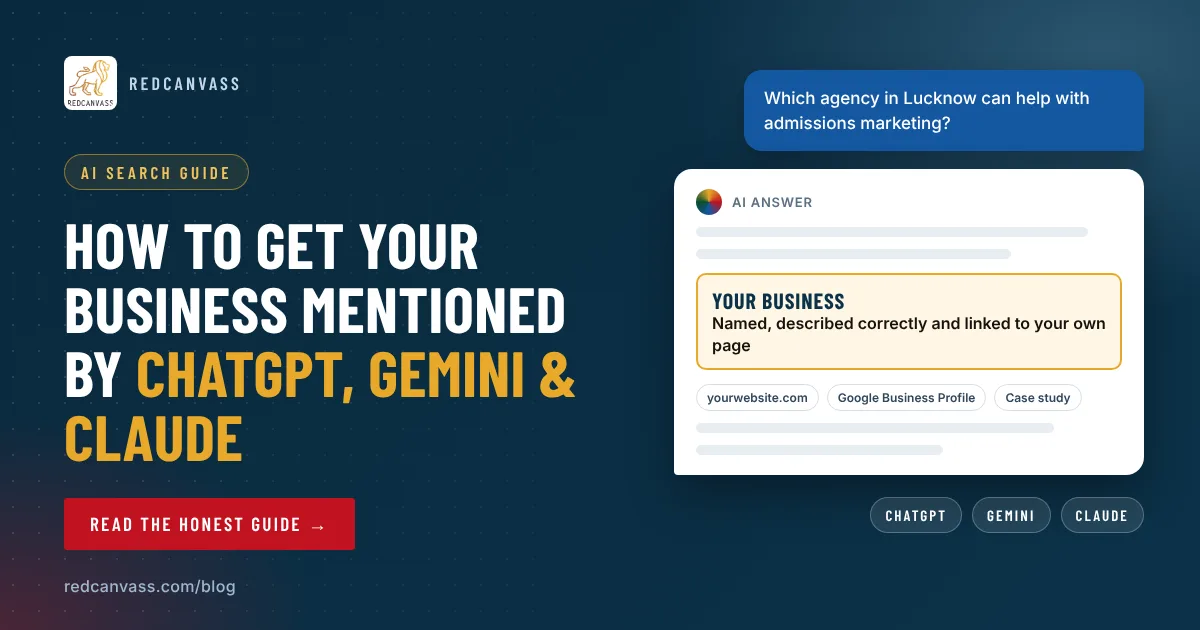
How to Get Your Business Mentioned by ChatGPT, Gemini and Claude (An Honest Guide)
You cannot buy a mention in an AI answer. You can make your business easy for these tools to find, read and trust. Here is the checklist, plus what we found when we ran it on our own website.
Read more →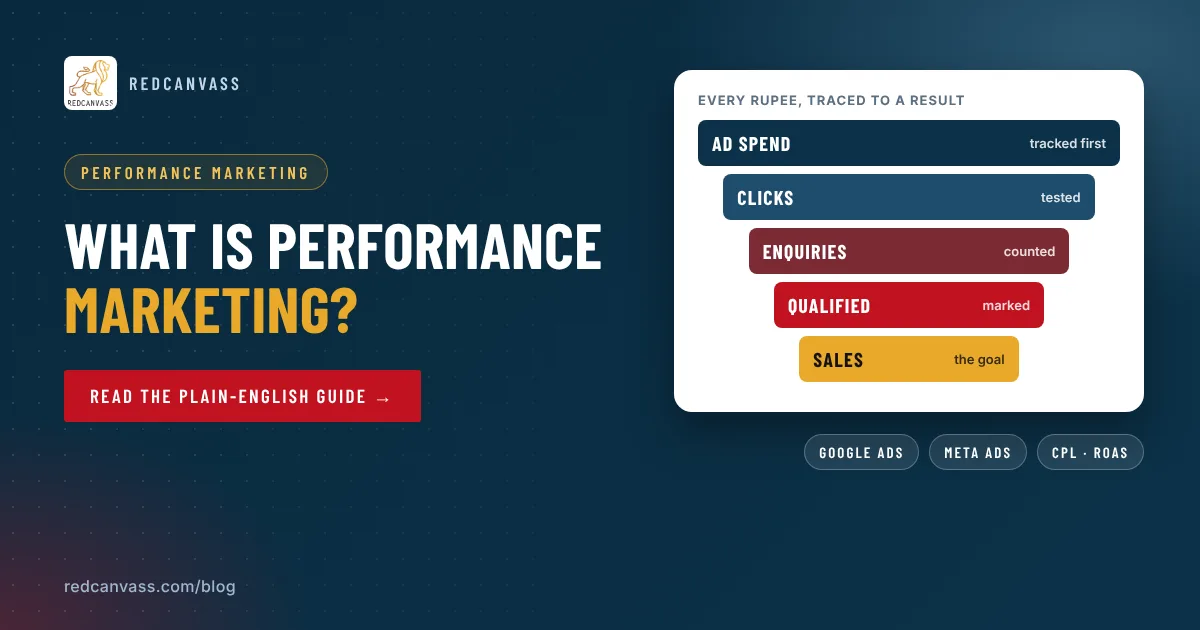
What Is Performance Marketing? A Plain-English Guide for Business Owners
Performance marketing means paying for advertising and judging it by a result you can count, such as an enquiry, an admission or a sale. Here is how it works, the numbers to watch, and real examples from our campaigns.
Read more →